
woodbloke
-
Posts
97 -
Joined
-
Last visited
Recent Profile Visitors
1,559 profile views


woodbloke's Achievements

Apprentice Poster (1/3)
71
Reputation
-
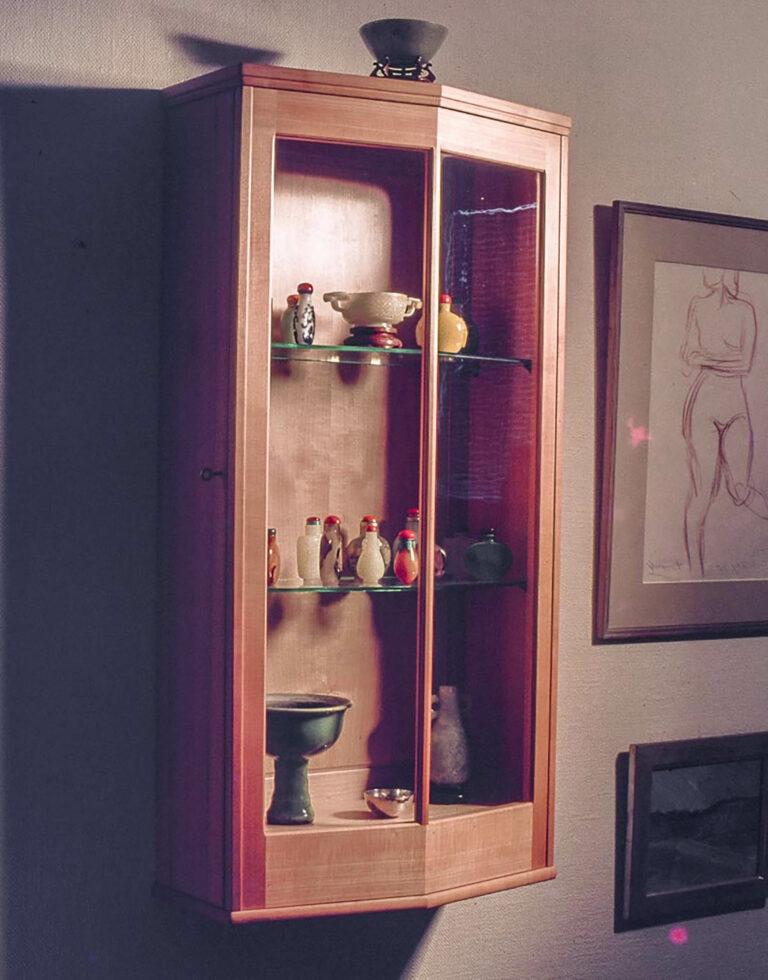
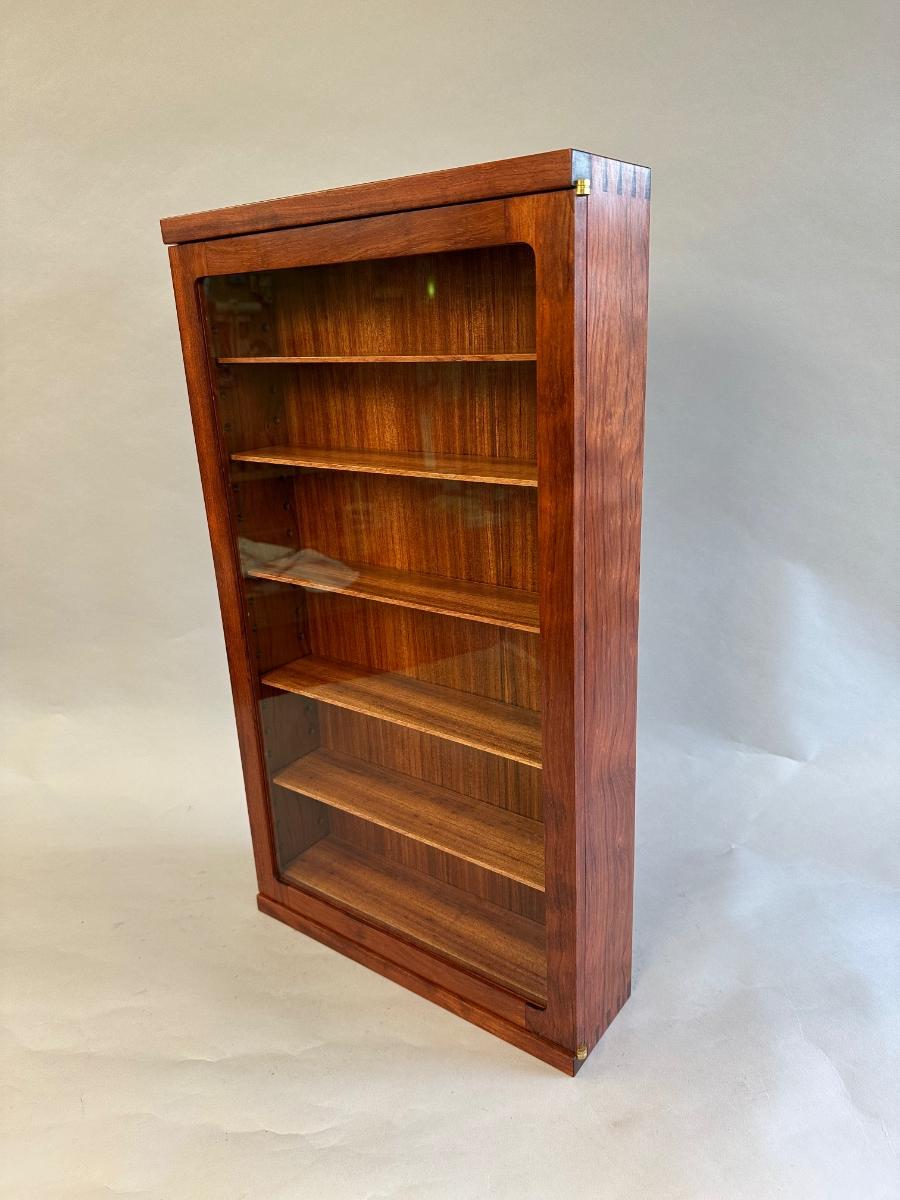
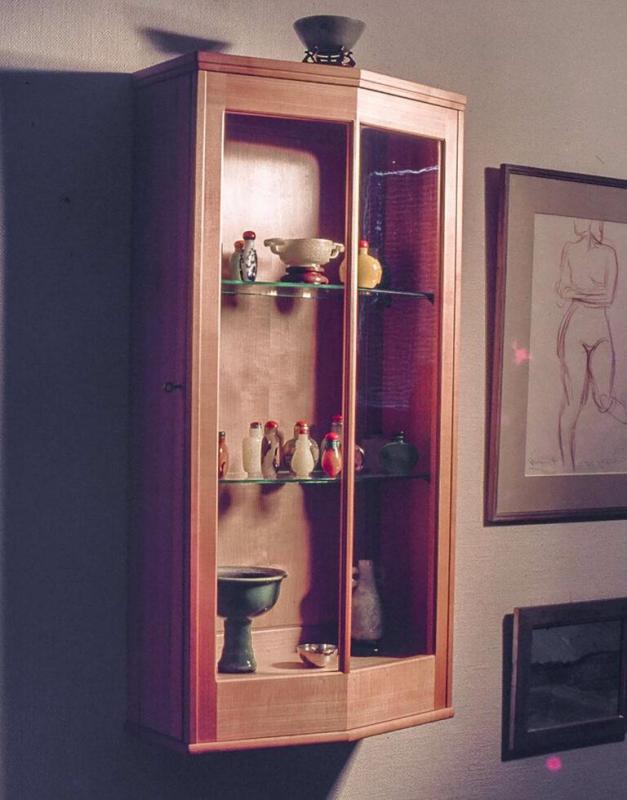
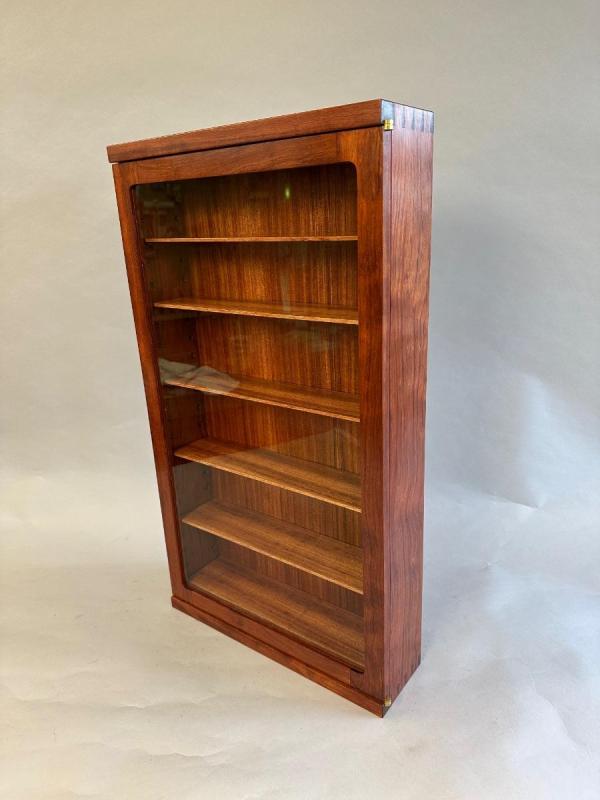
The things under the scissor jack are small paving slabs from the back of the garden. I have a decent lathe with all of the kit needed for spinny work on the 'Dark Side' which I do when the mojo takes a grip! As to the next project at the bench, it's another interpretation of a Krenov piece: ...which is this wall hung cabinet with a 'V' section door. I made a prototype door in gash pine last year which turned out quite well and the door is unquestionably the hardest part. Jim's cabinet seems to be in Maple or Cherry; mine will be in solid English Walnut with a panelled Walnut back. As requested, I'll drop in from time to time to give you chaps an update on this thread - Rob
-
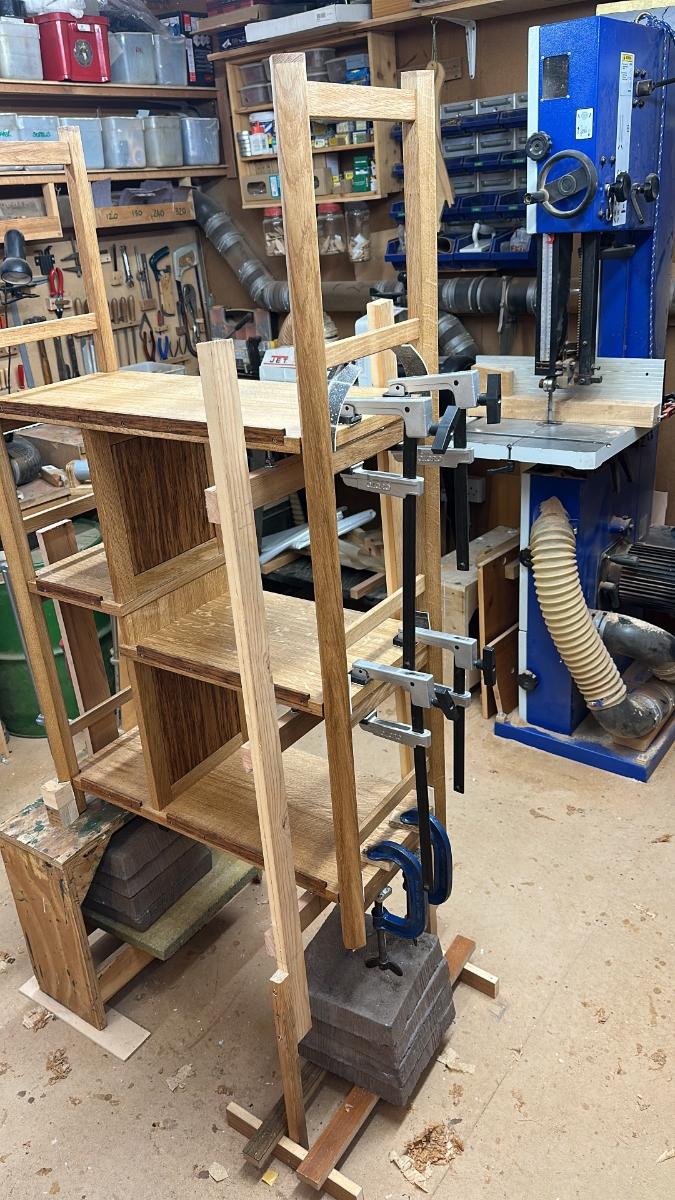
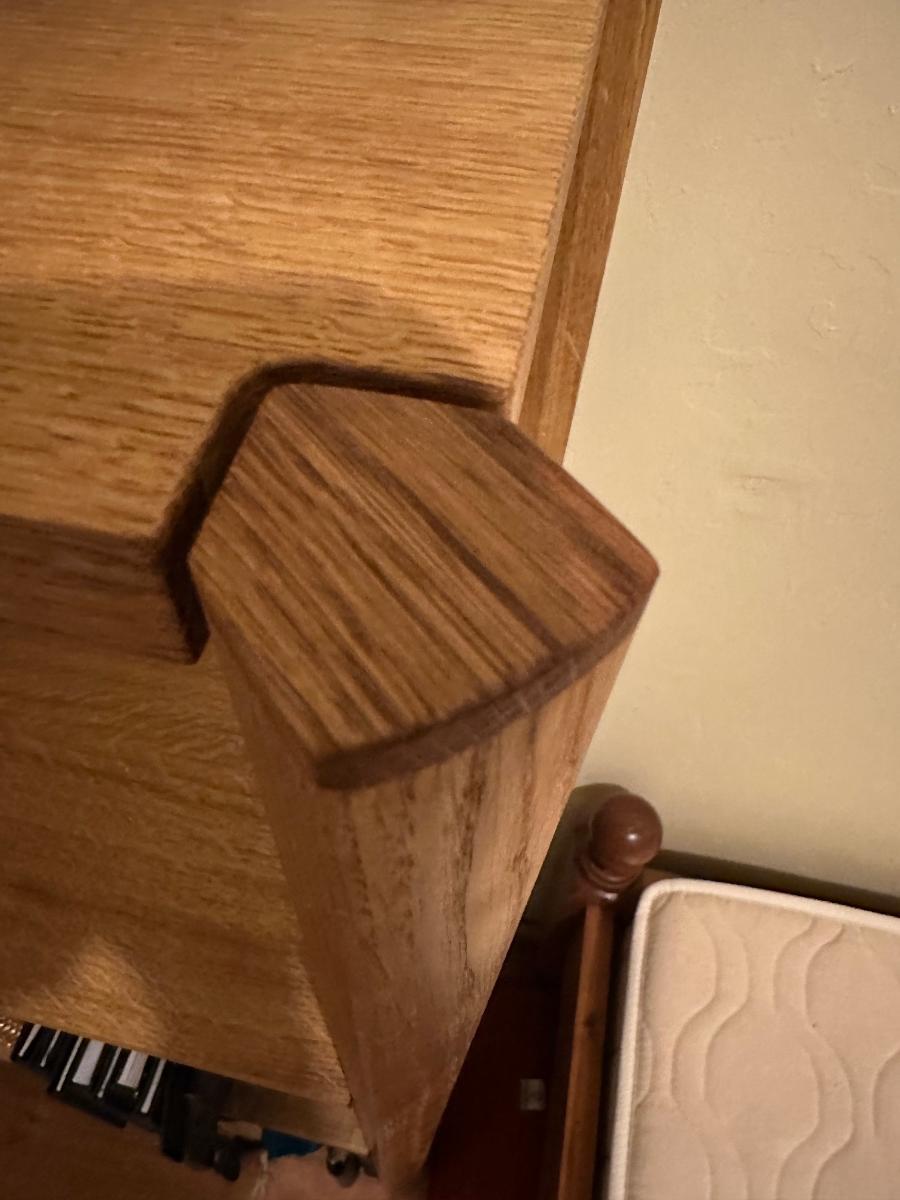
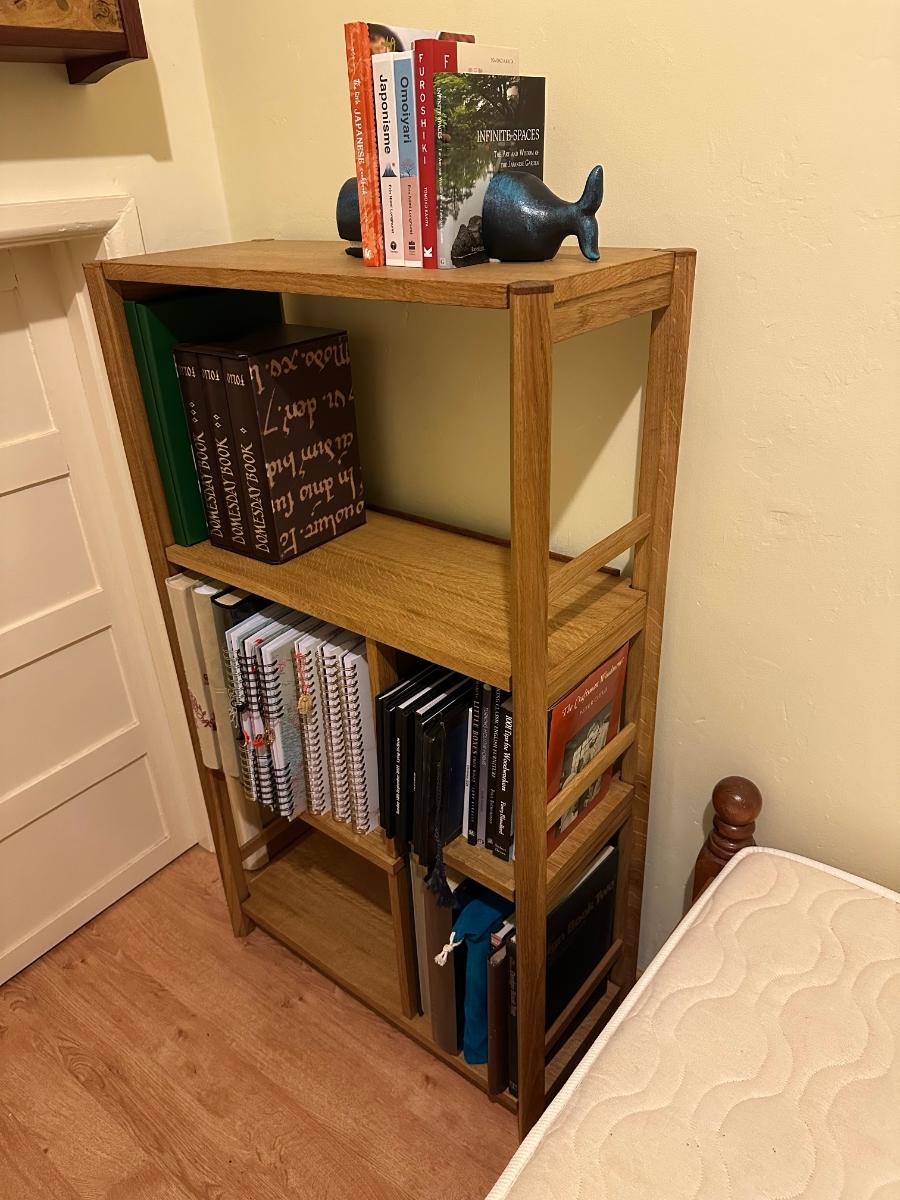
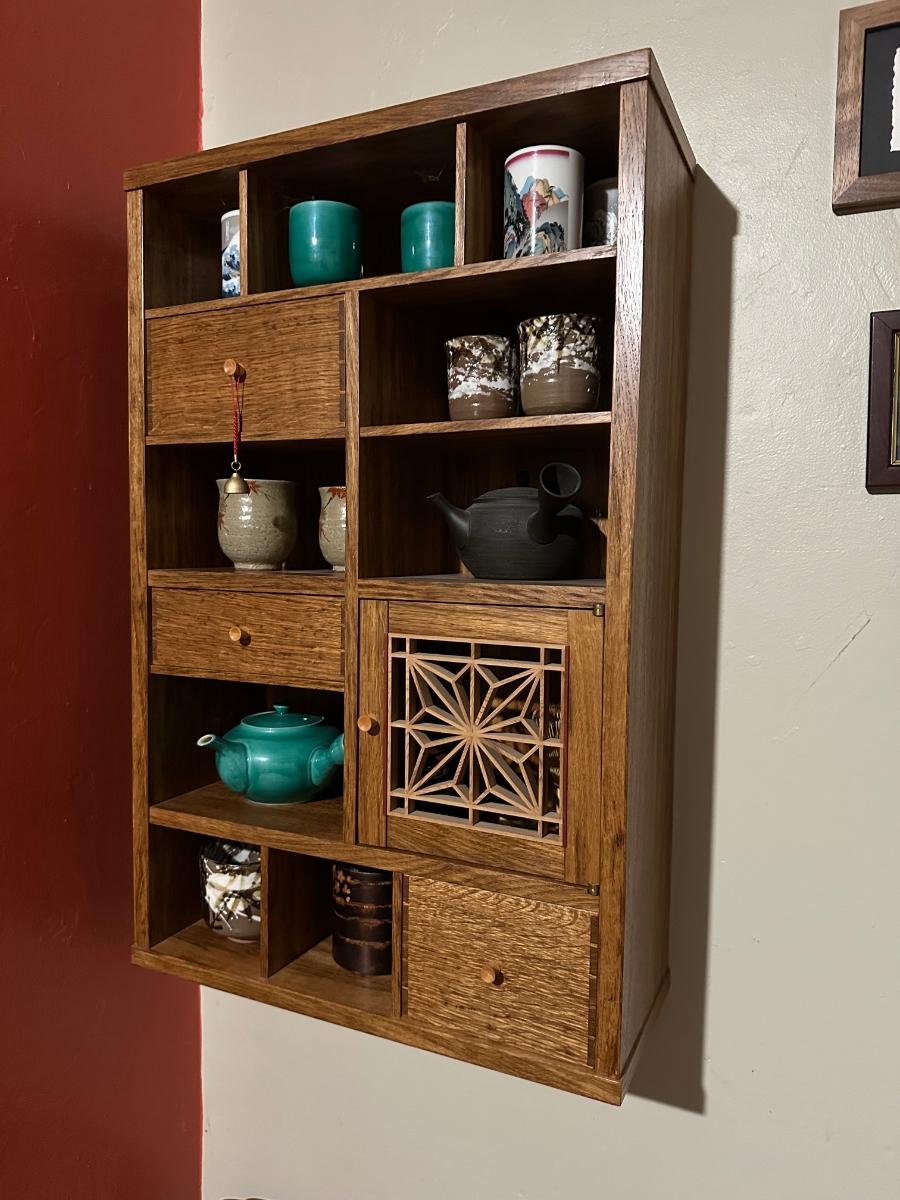
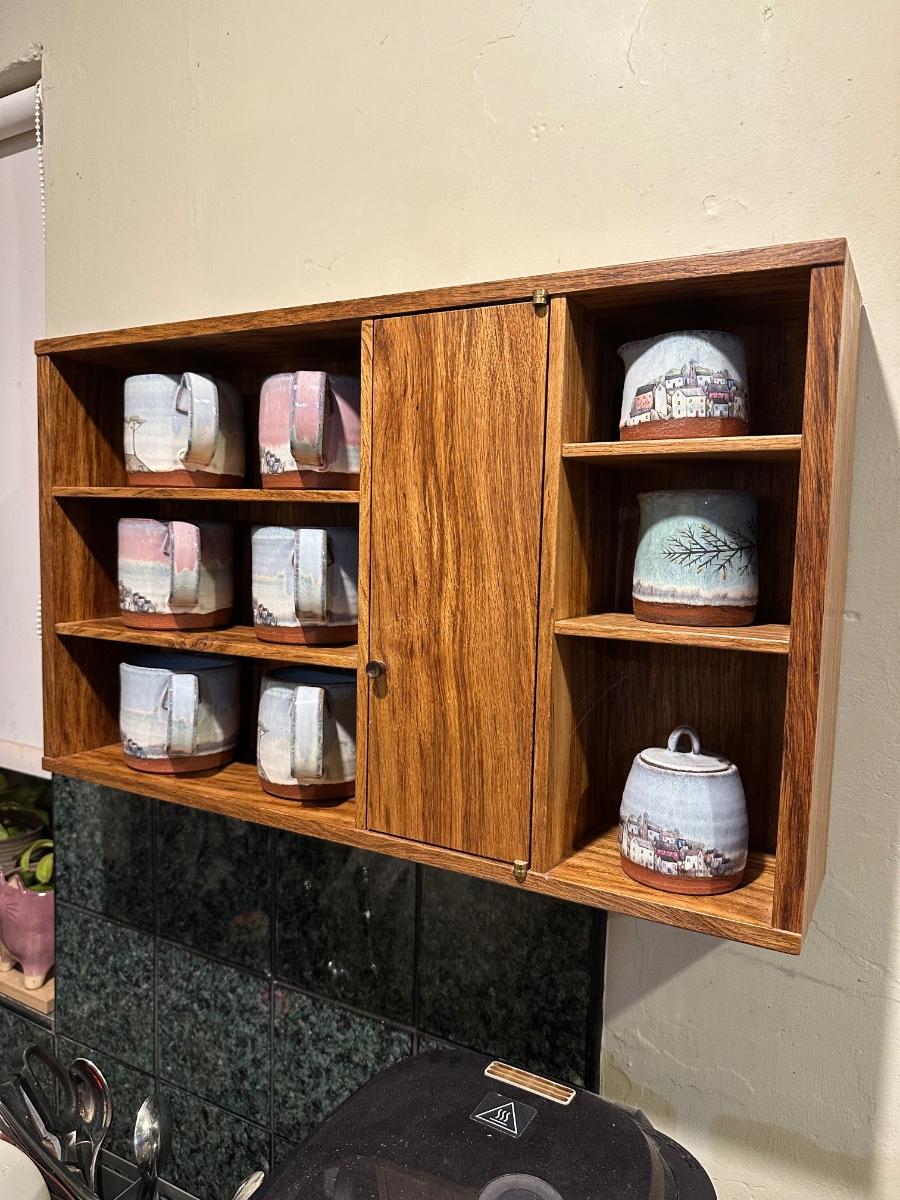
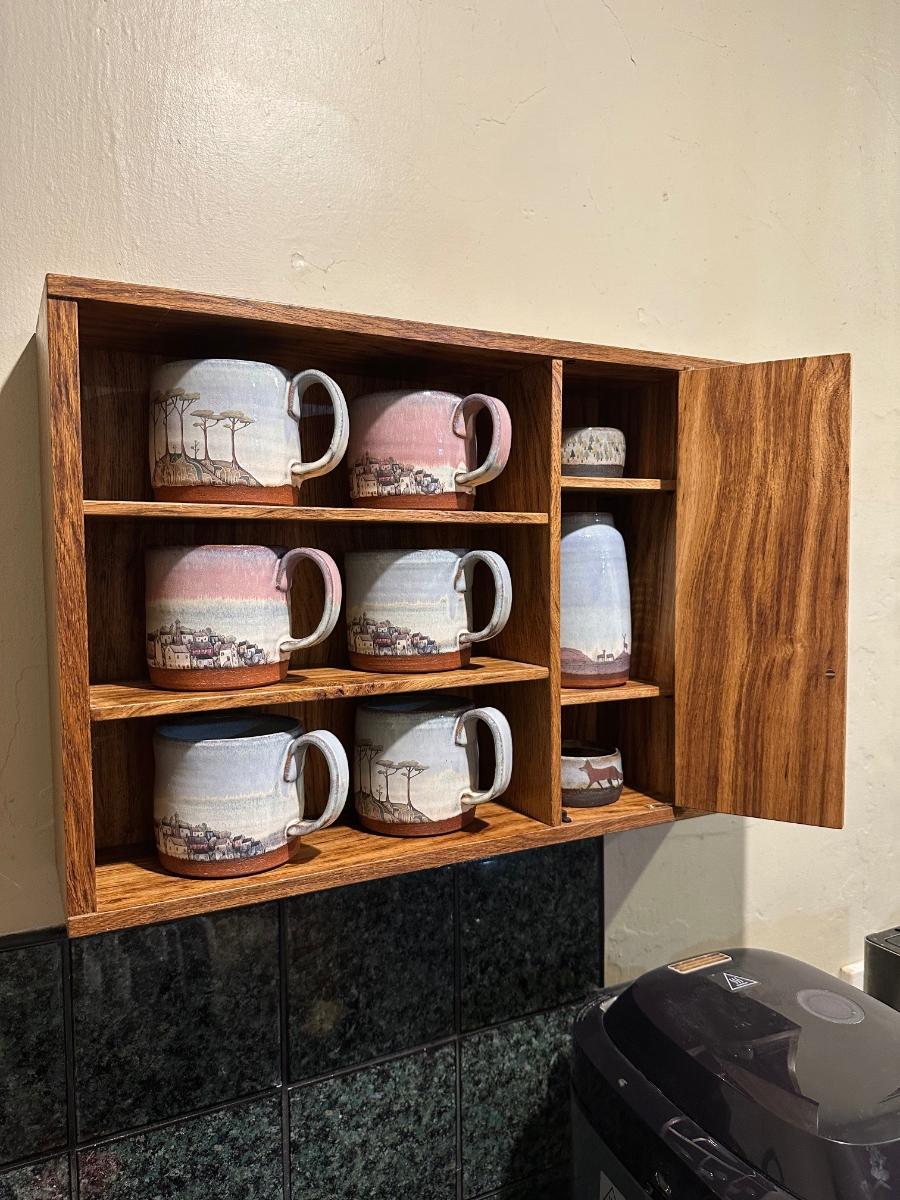
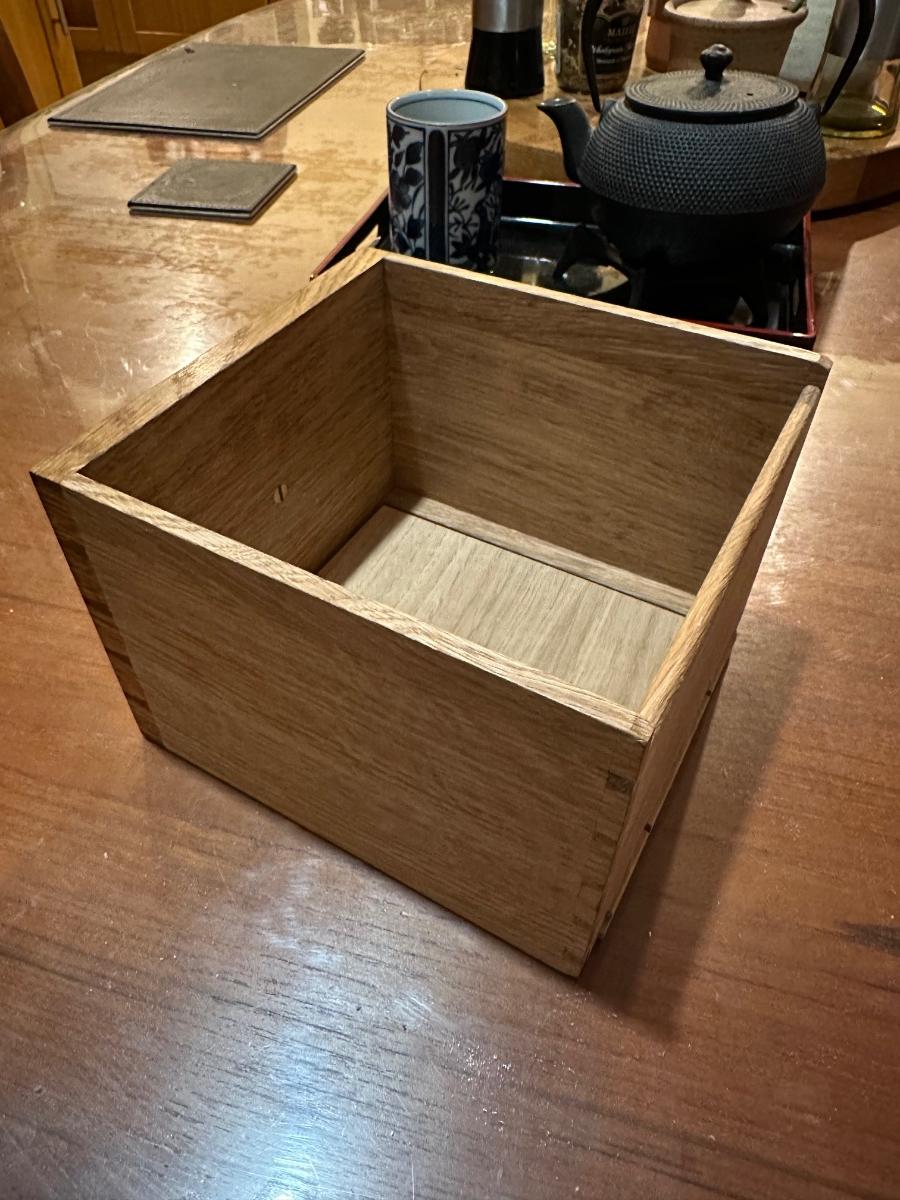
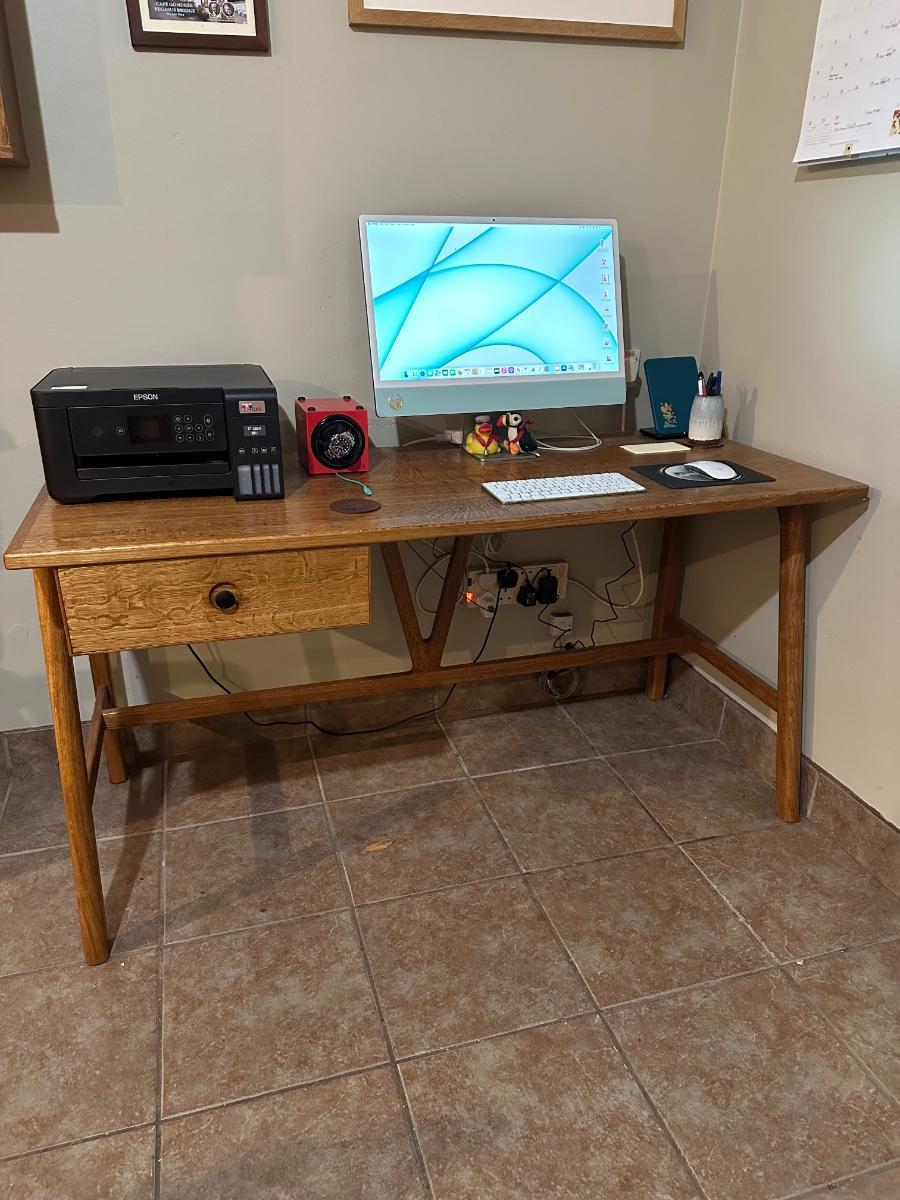
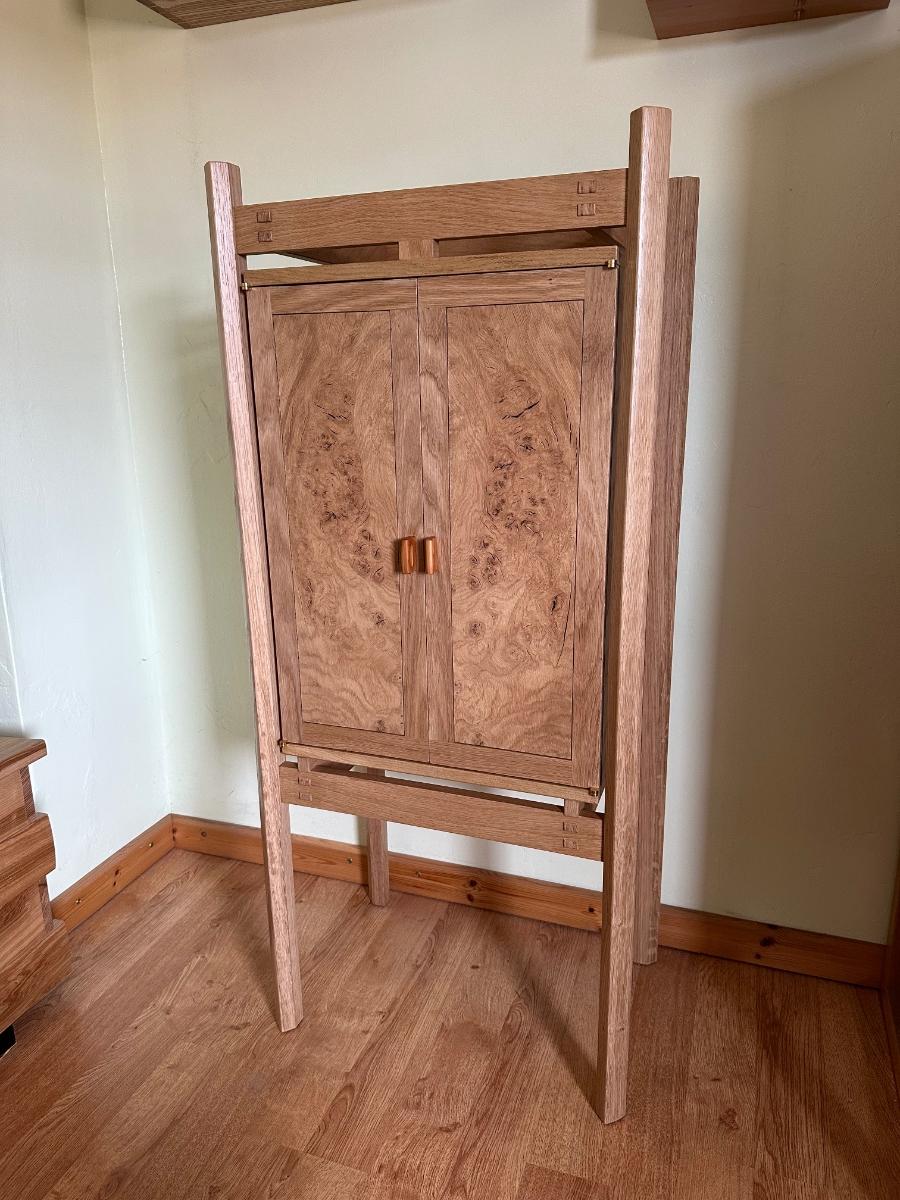
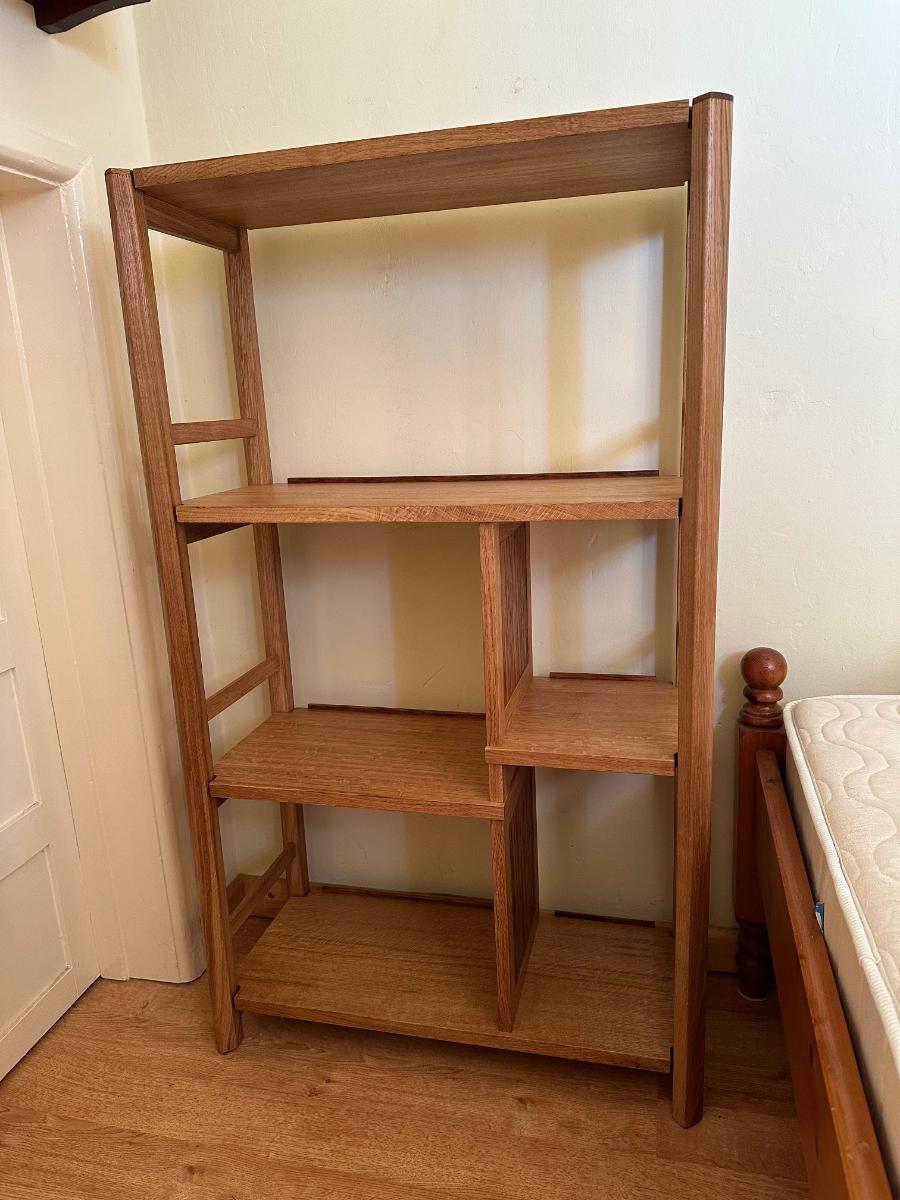
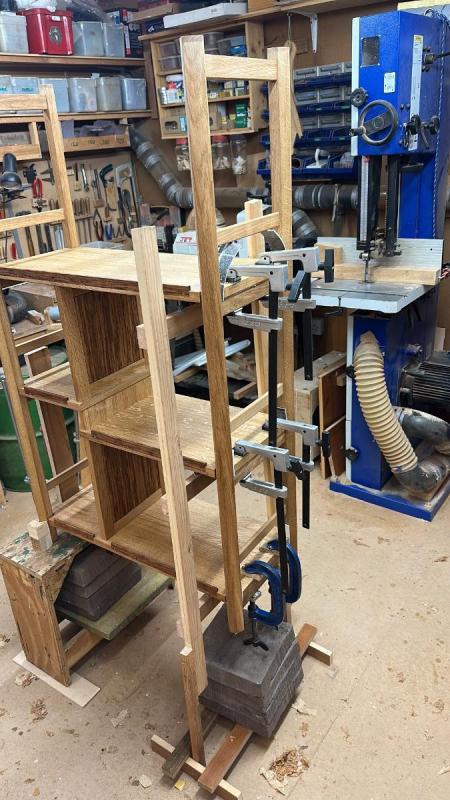
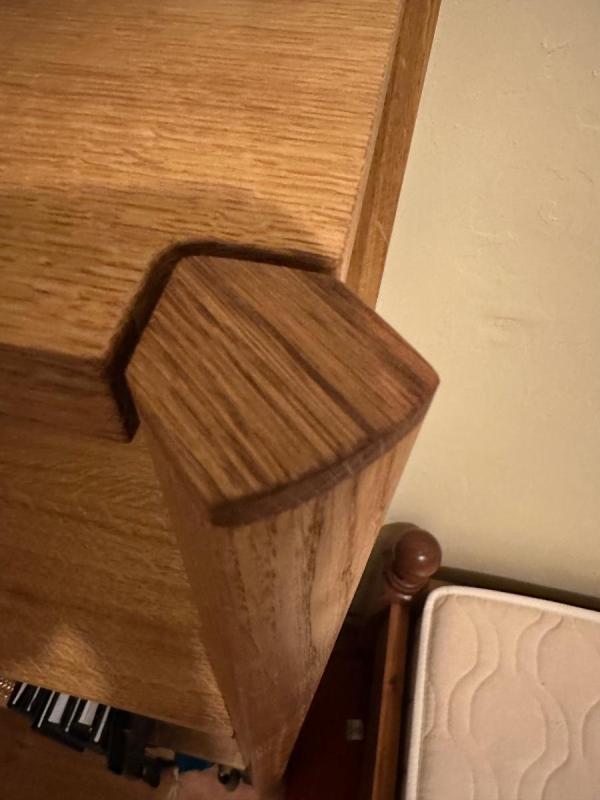
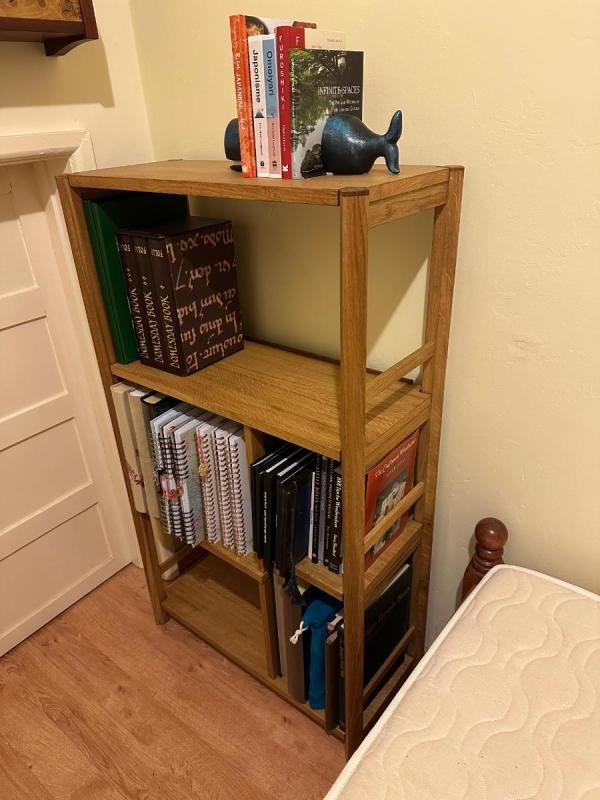
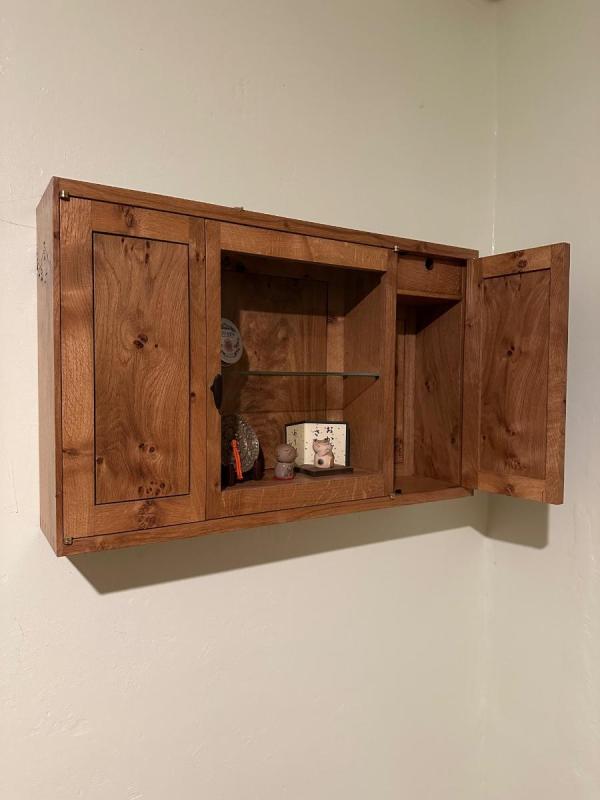
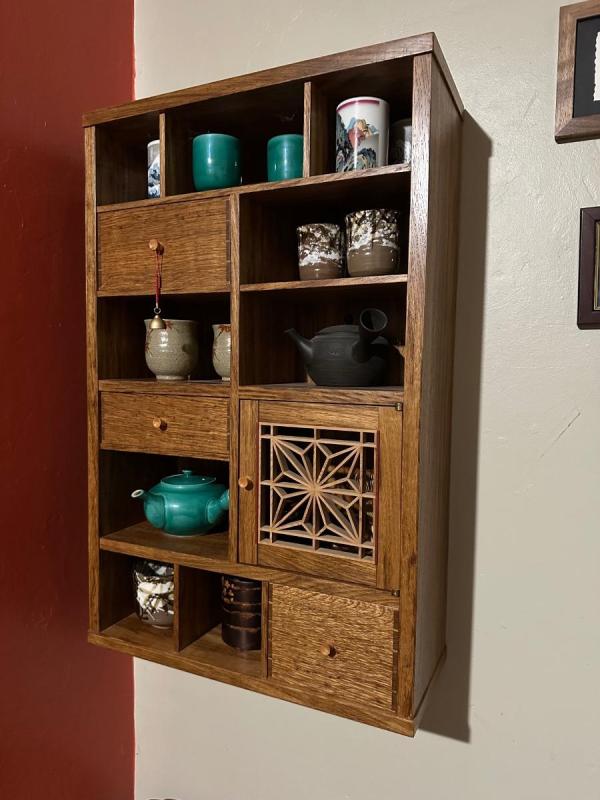
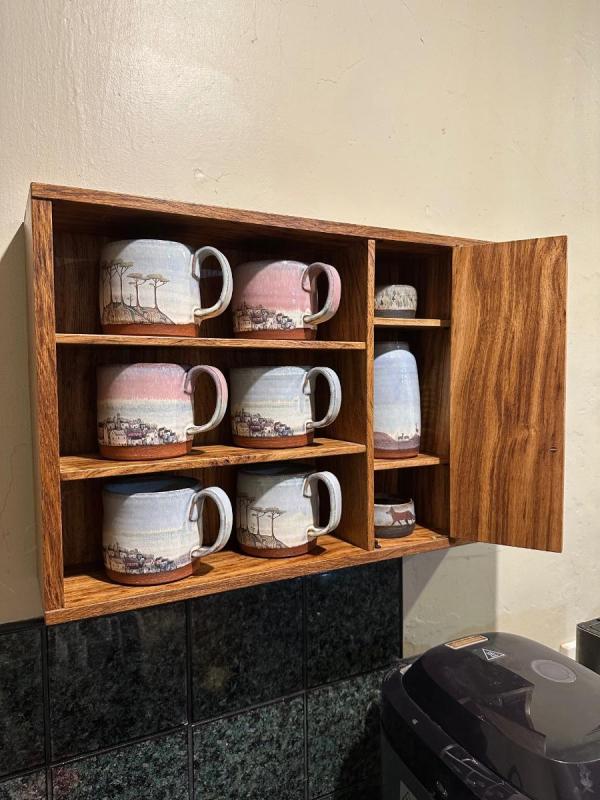
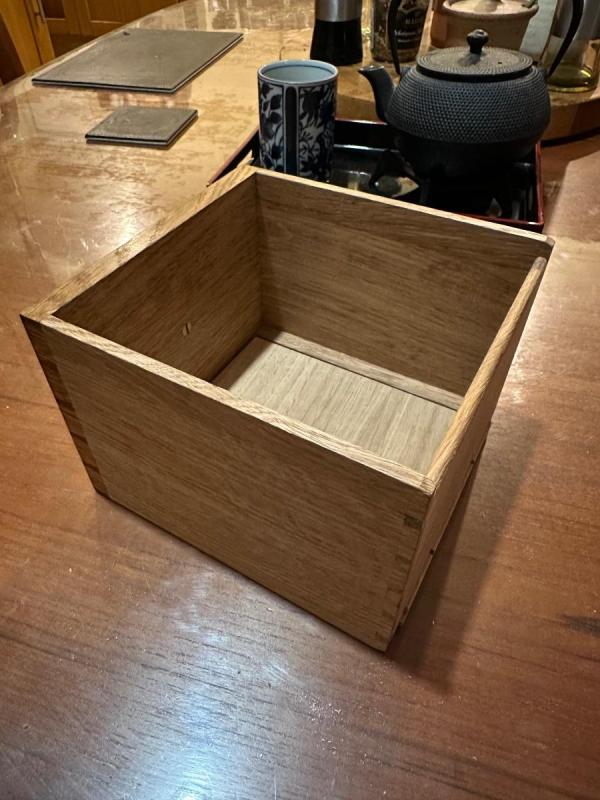
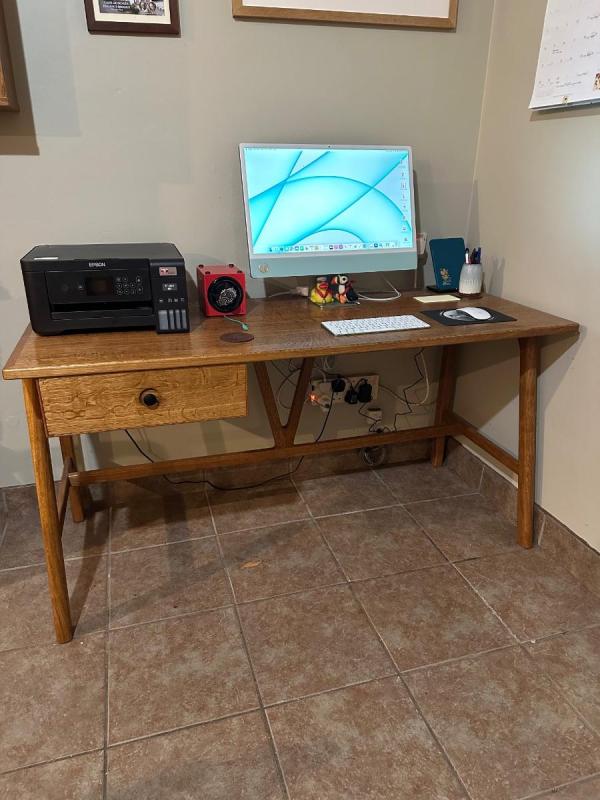
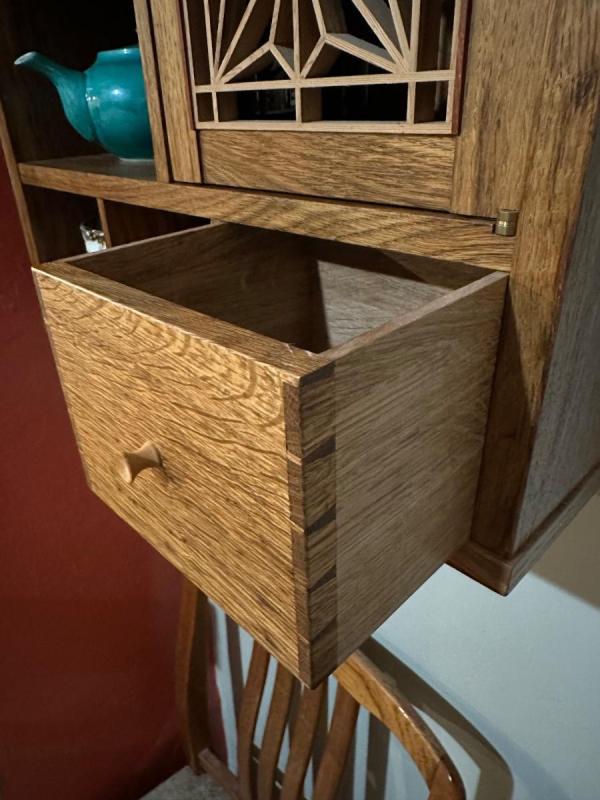
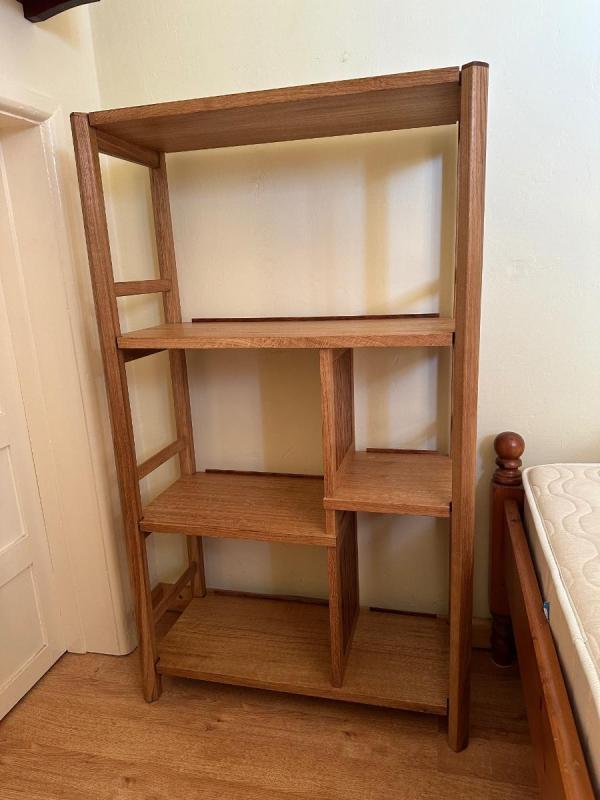
Thanks for all the compliments; much appreciated. If you're familiar with the work of Jim Krenov, you'll recognise that many of these pieces are interpretations of some of his work. They're not identical copies as they differ in many ways from his originals but I was inspired to make them after have read his excellent, no holes barred, warts n'all biography 'Leave Fingerprints', published by Lost Art Press. Some of his work is relatively straight forward, some is fiendishly difficult ('A Playful Thing', which he only made once; mine is much smaller than the original with a different drawer arrangement) Here's a few more pics of work completed over say, the last five or six years, beginning with what looks like a fairly easy book case, shown above. It wasn't, because due to an abject failure of design, the shelves couldn't be assembled from the top, but had to go in sideways, which made life very difficult. This first pic is a close up of one of the five sided Krenov legs: There was an insane amount of detail drawing required to work out where the lippings were glued etc to obtain that 3mm shadow gap all round. A couple of shots of the assembly in no particular order: ...using a car scissor jack (very handy bit of kit!) to hold up the entire thing. A last pic of this piece in use: This is an interpretation of another Krenov piece in Brown Oak: ...and note there are no door pulls. Each door is opened by a secret, ingenious 'toggle' on the underside which took a bit of head scratching to work out how JK did it. Another interpretation below of a simple JK cabinet in Brown Oak, this one having a door opening to reveal more of my wife's collection of coffee mugs etc from a Scottish potter called Julia Smith: This piece is one of my own concoctions, again in Brown Oak. This time it's to display: ...a collection of Japanese tea ware collected on our travels. I tried my hand at doing a little Kumiko panel in the door, turned Boxwood pulls on the door and drawers. Each drawer: ..has quarter sawn Brown Oak sides that are 5mm thick, through dovetail construction. Drawer bases are in quarter sawn Oak: ...with drawer slips, so there's no need to make a groove into the drawer side. This a very common way in Europe and the UK to make drawers with fine, thin sides. The last piece again is in Brown Oak and is an interpretation of a Wenger desk with his classic 'wishbone' signature. As you can see, it's used as our computer desk - Rob


-
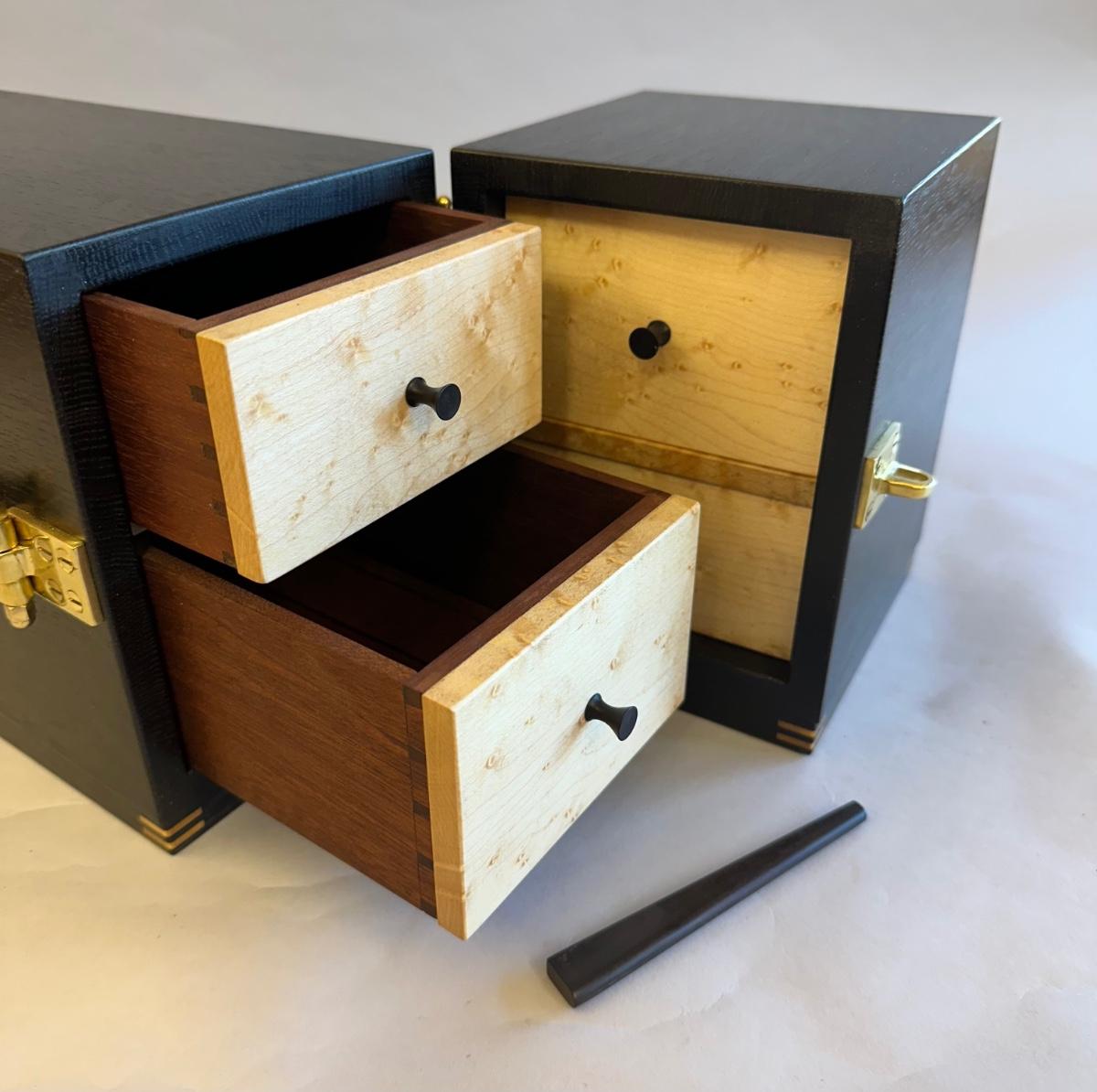
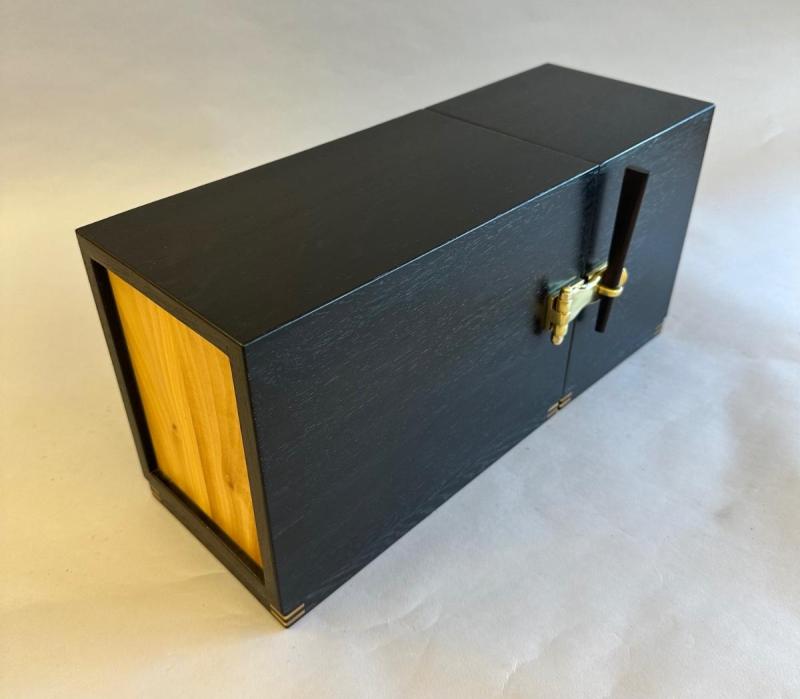
The turned pulls are very tiny and locate one above the other as the unit is closed, so they never actually touch one another.
-
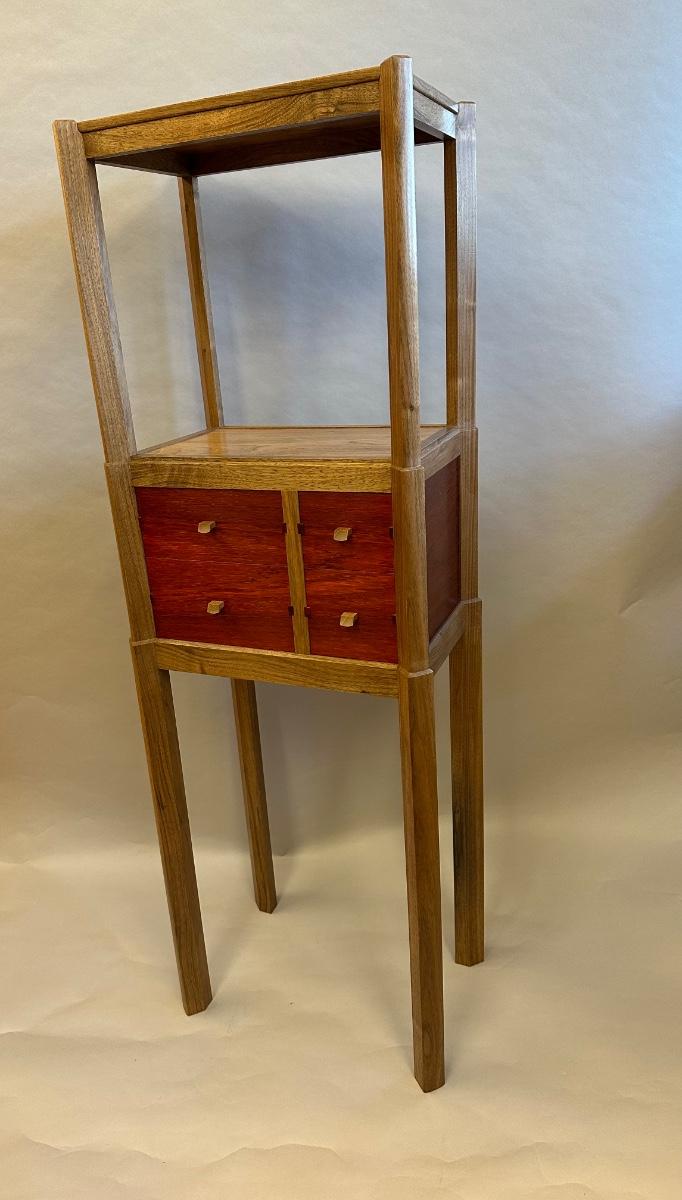
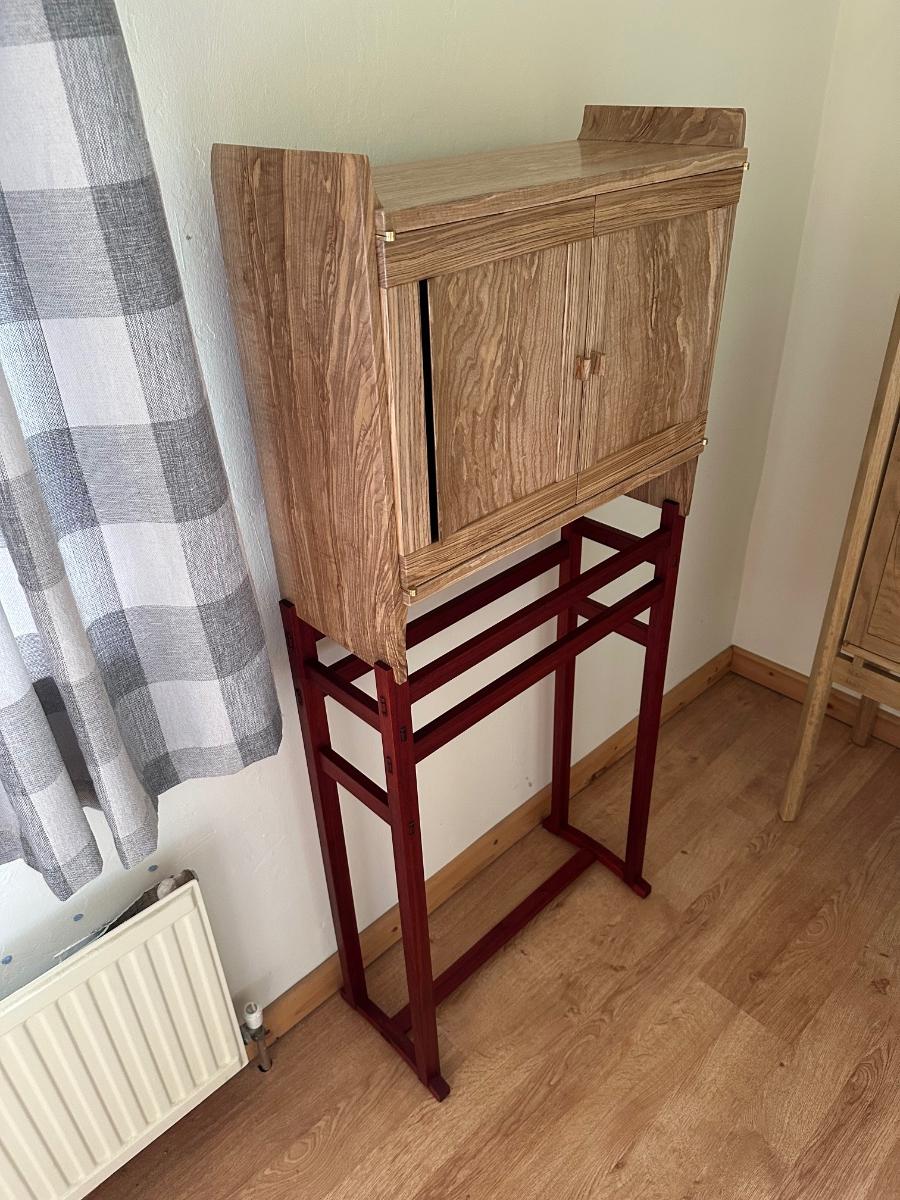
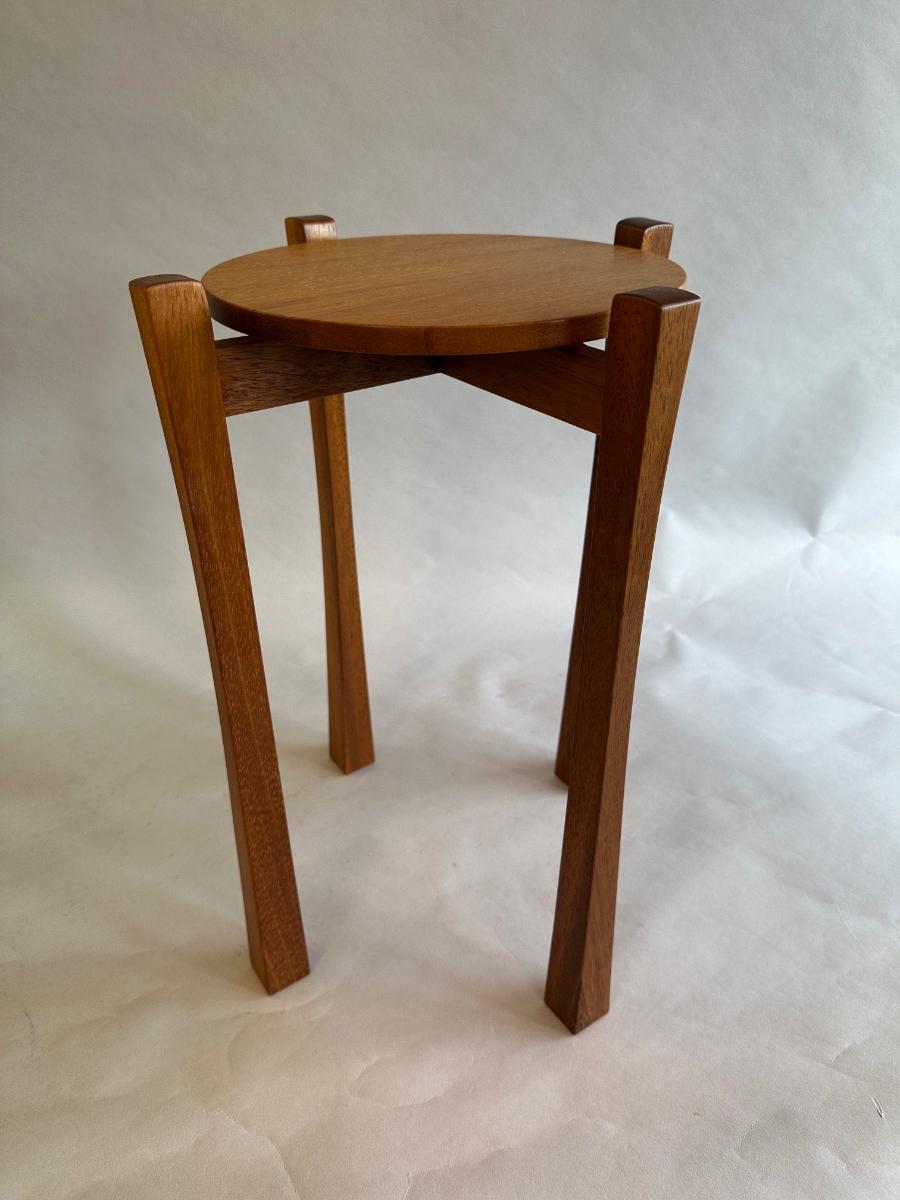
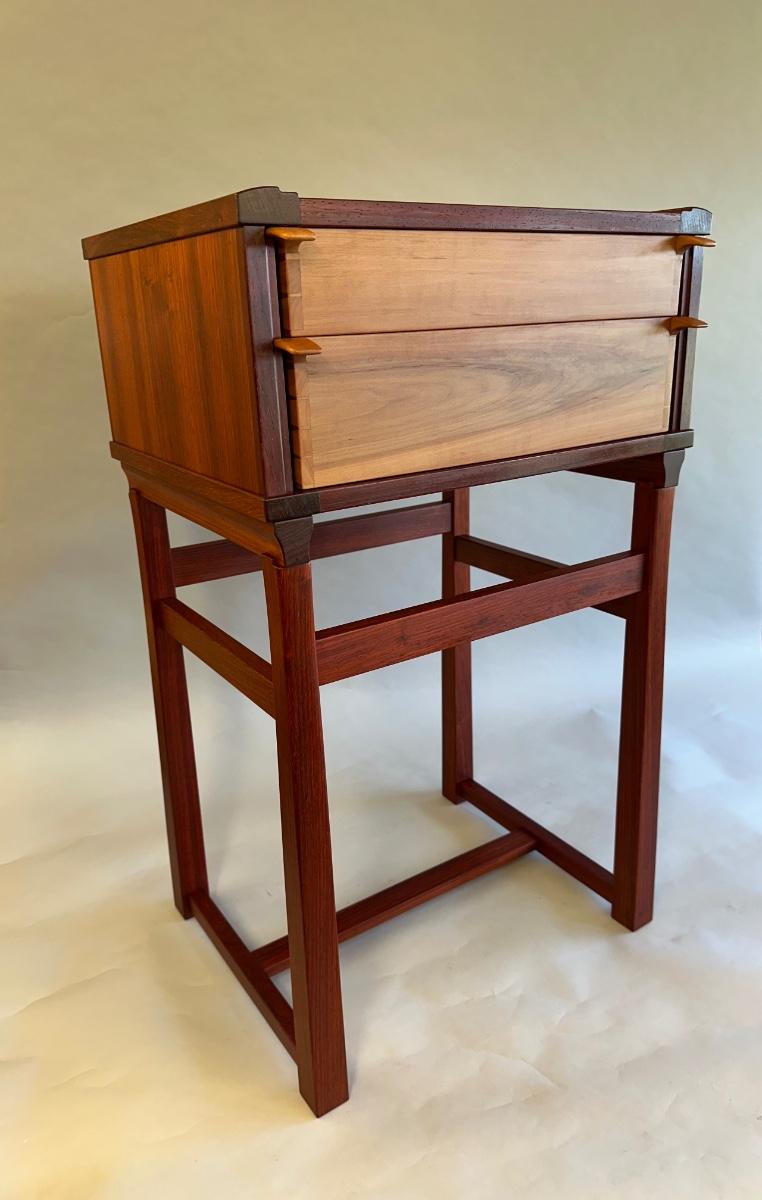
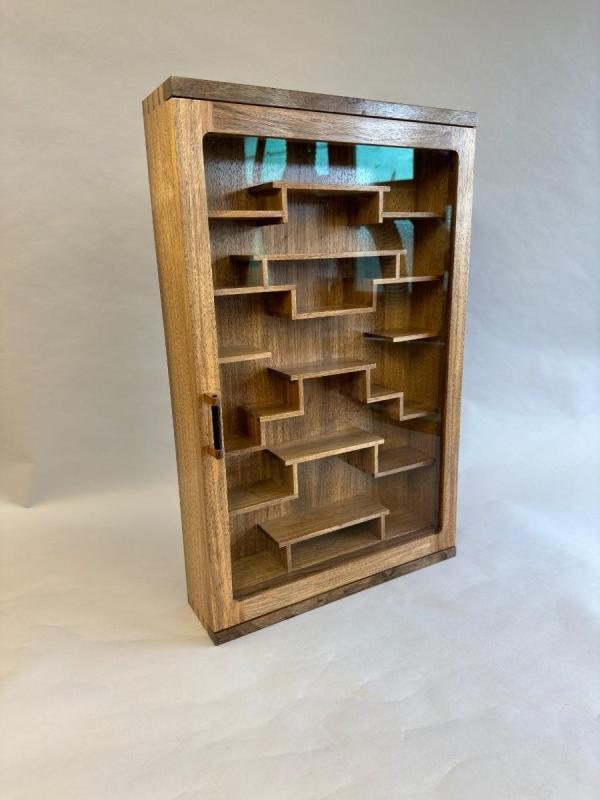
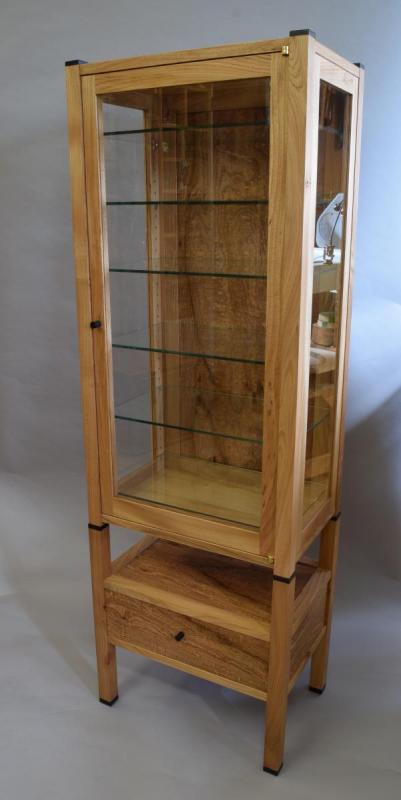
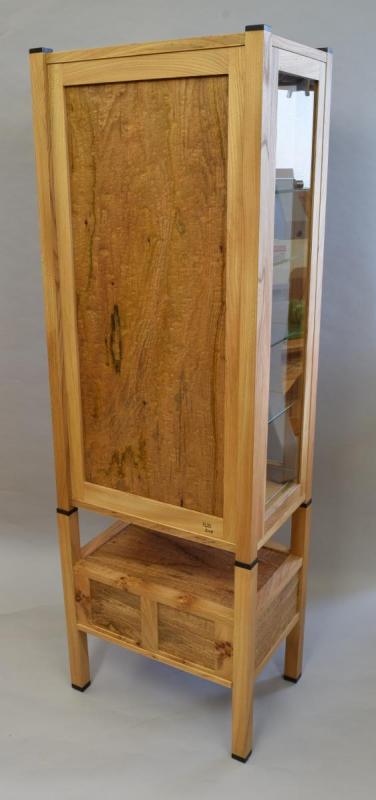
Finished yesterday; small wall hung cabinet in Bubinga 'A Playfull Thing' in English Walnut and Paduk Box in the style of Kenji Suda, in English Bog Oak, 5,300years old Cabinet in English Walnut to display my wife's collection of Netsuke 'Britta's Cabinet' in English Oak Krenov cabinet in English Ash and Paduk Small Krenov wine table Krenov 'Silver Chest' in Swiss Pear and Paduk Bookshelf in English Oak and Brown Oak That's me with the Brompton cycle....but where???



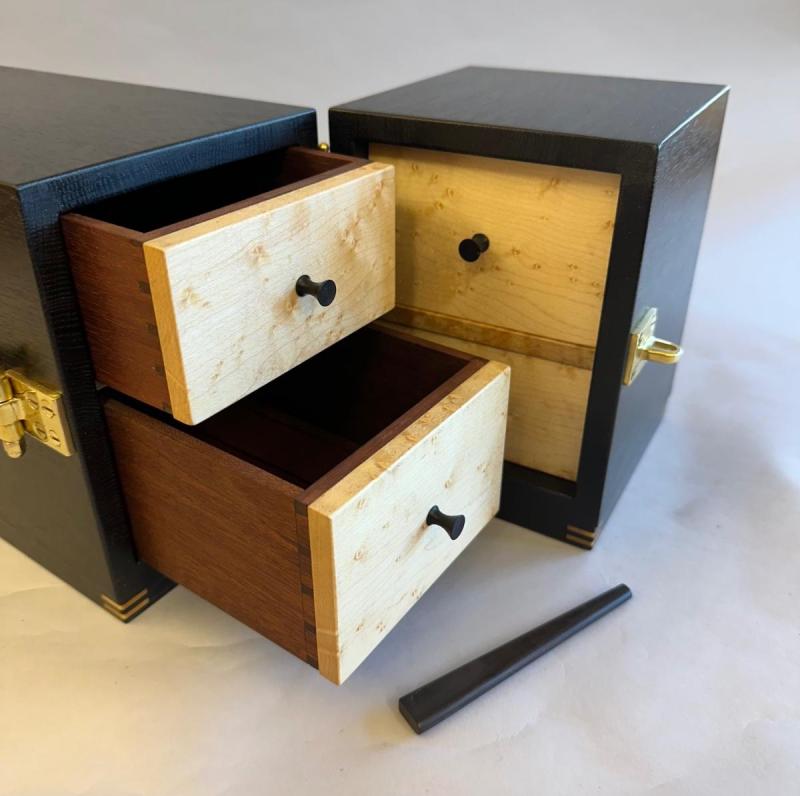

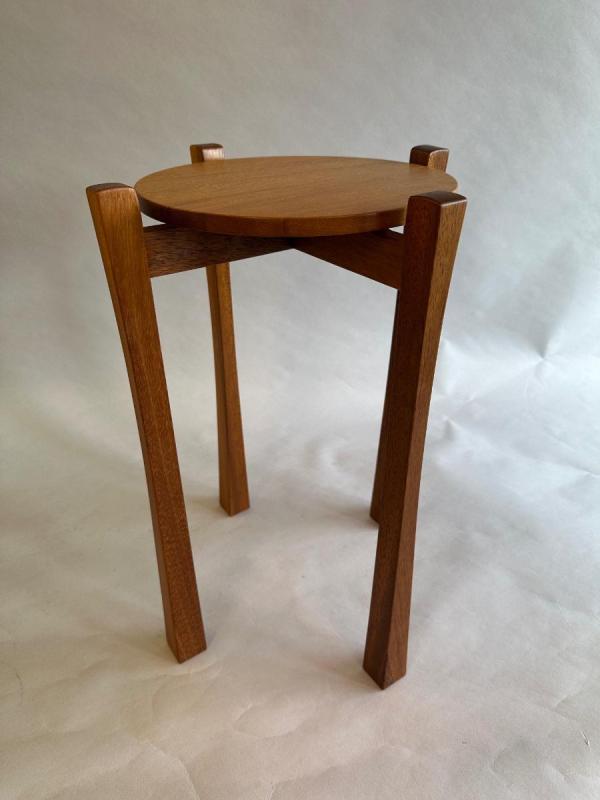
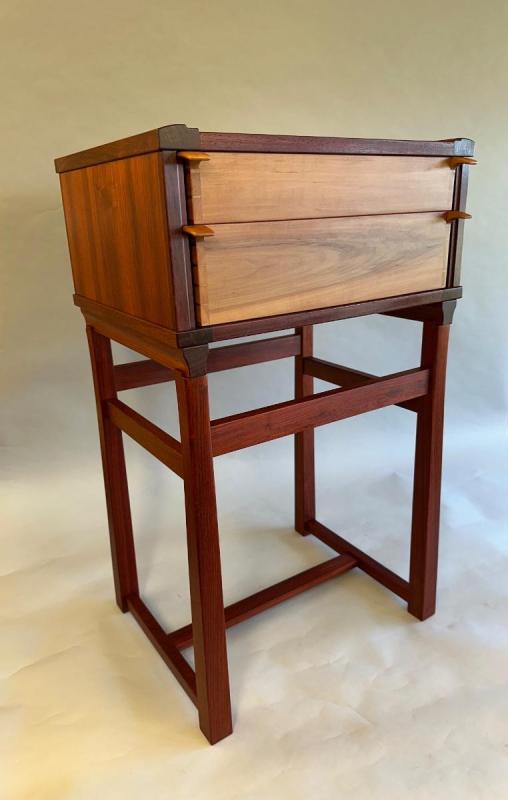
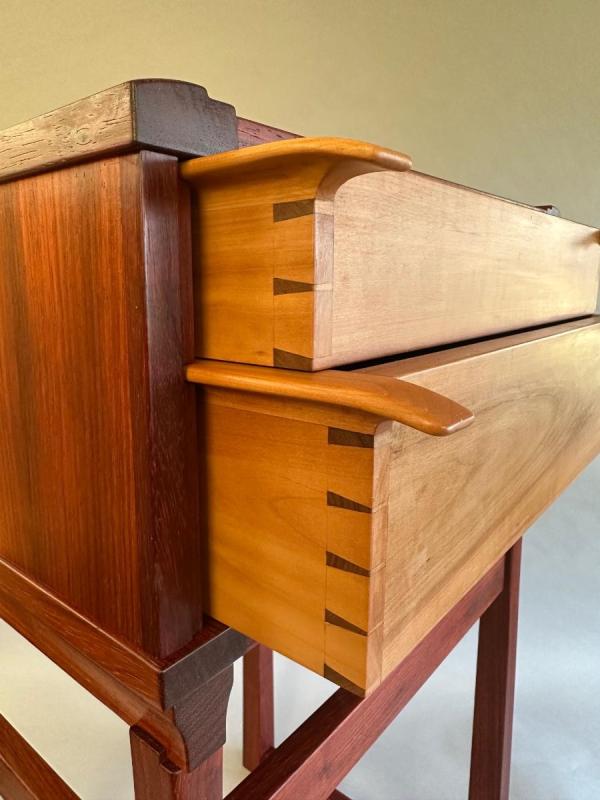
-
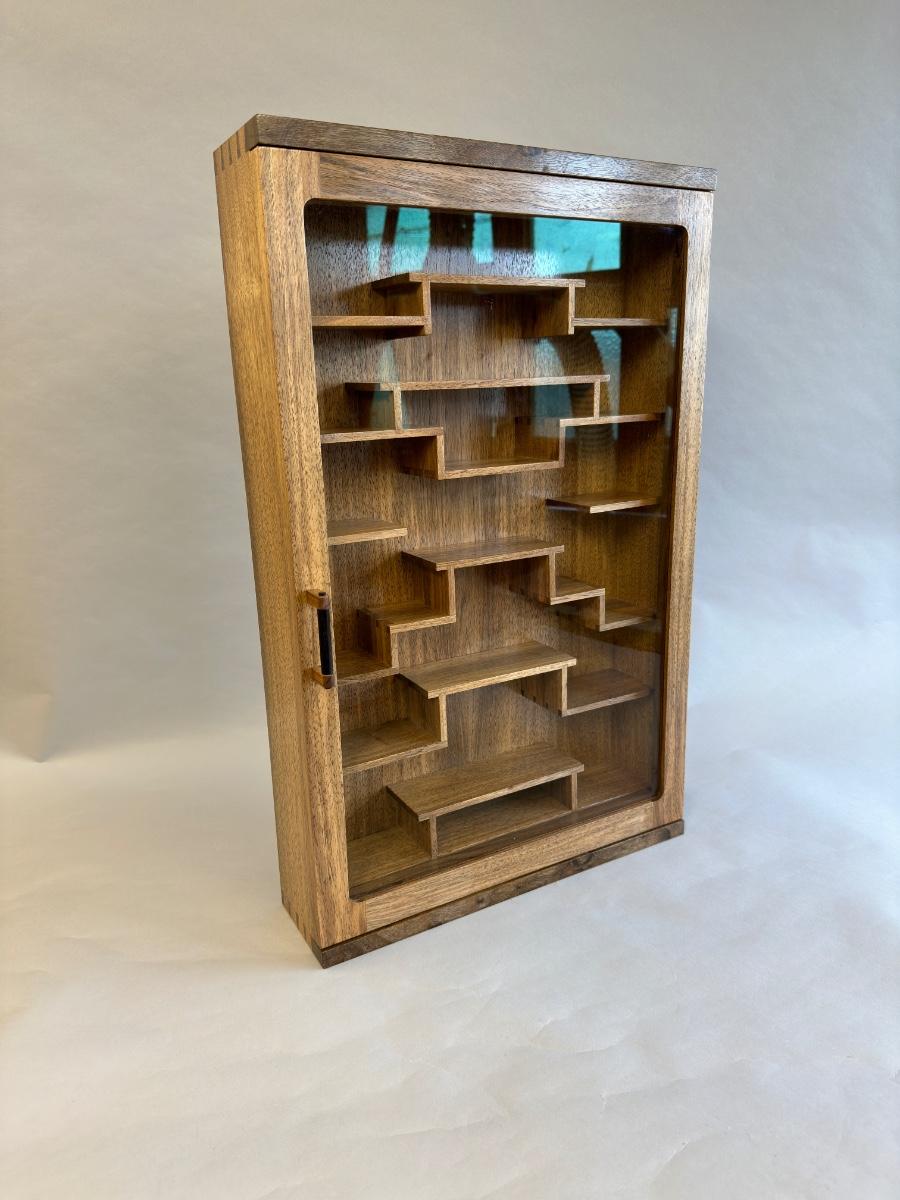
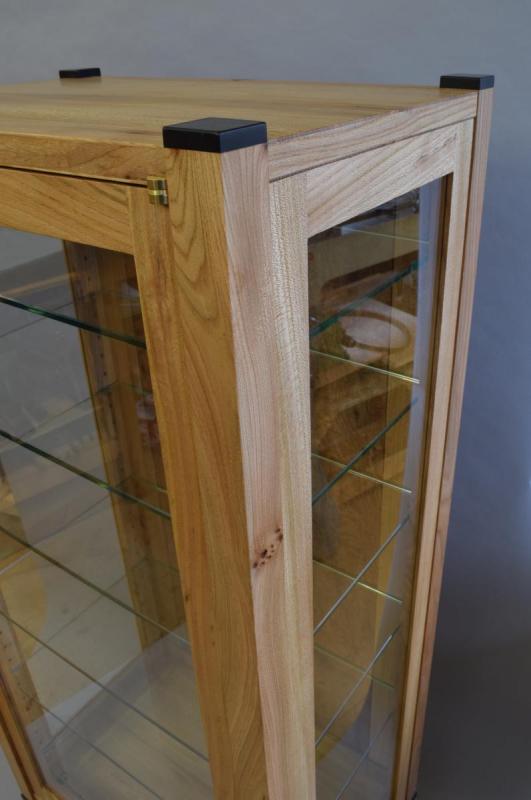
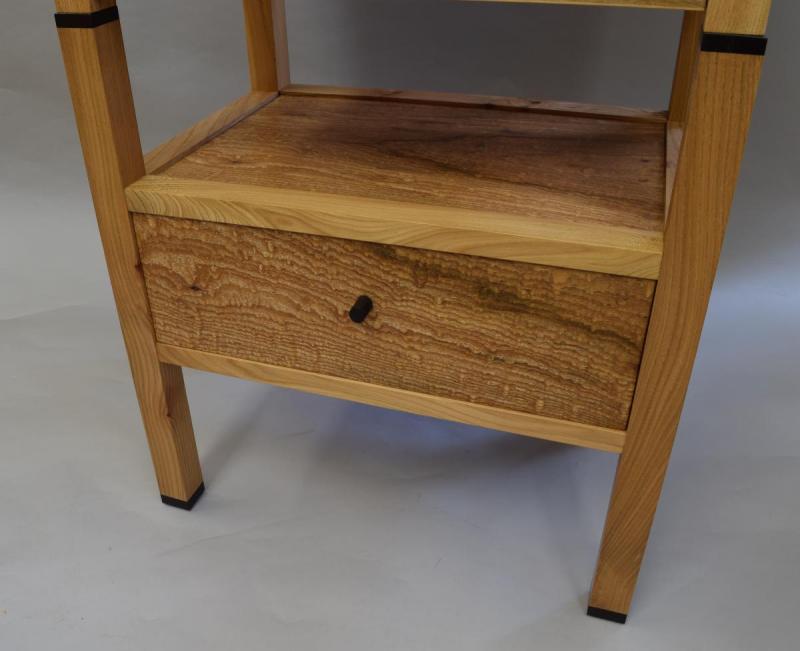
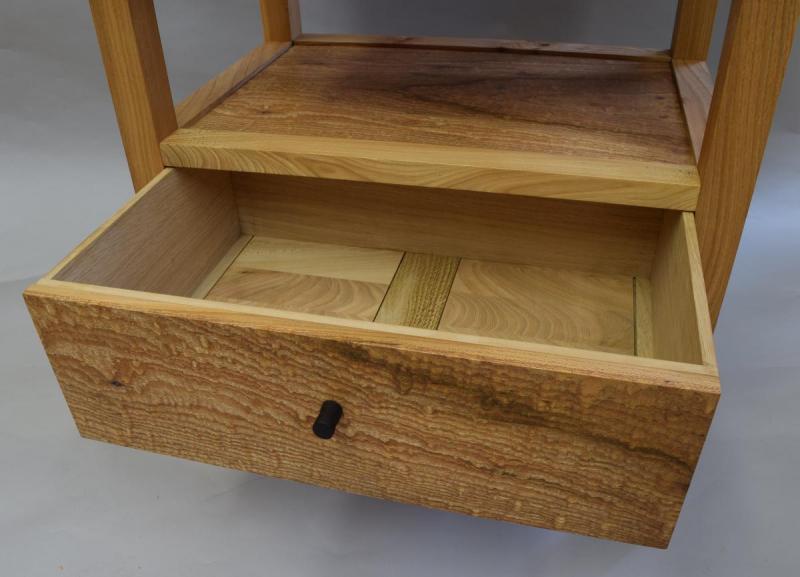
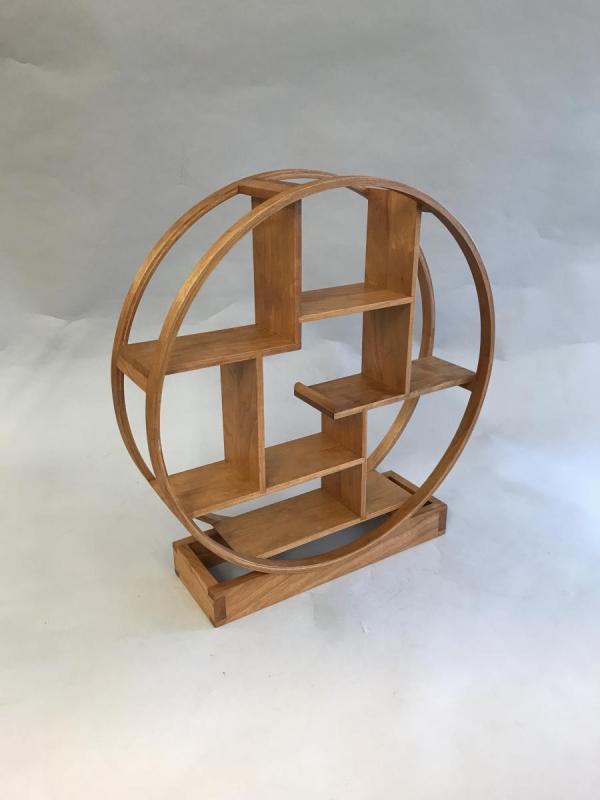
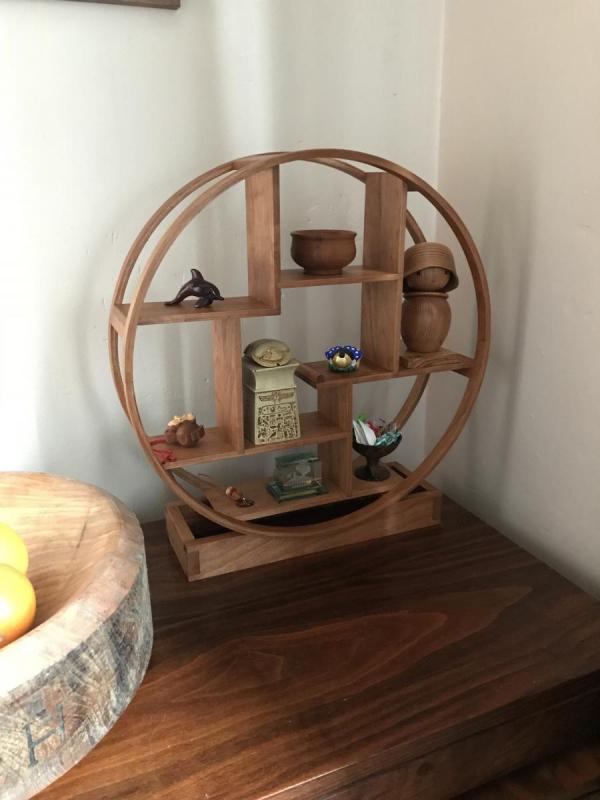
The first thing I finished last month was this 'Cabinet of Curiosities' and I thought you lot on the other side of the pond might want to have a swift gander at it. It's based on an interpretation of contemporary Korean furniture, much of which contains a drawer(s) suspended mid-way in a framework with fresh air above and below: It's been made from English Elm and the thing that determined the overall size was the solid 'waterfall elm' back panel: ...which was the starting point for the project. Jointing on the frames was by using 4mm ply strips running in grooves the length of each section. The top and bottom of the cabinet: ...were made from 16mm MR mdf and 2mm bandsawn veneers glued in the vacuum bag; the accent details at the top were made from Indian ebony. The drawer box and front; ...were made from bandsawn veneers of 'waterfall' elm, again with accent detailing in Indian ebony. The lower and upper frames were domino'd together with ebony detailing to highlight the join and the lower frame is fractionally bigger by 2mm to add additional 'weight' to the design. The drawer itself: ...is made from 7mm thick quarter sawn English oak with a planted drawer front which was screwed into position. It runs on a centre rail underneath the wide muntin and has a solid elm bottom running in oak drawer slips. This arrangement makes the drawer more complicated to build, but much easier to fit as the sides don't need to fit or even touch the framework. The finish is a couple of coats of mat Osmo-PolyX with organic Swedish beeswax polish over the top. There are six polished, 6mm shelves, one of which is occupied by my better half's impulse buy from the Tokyo Skytree. The second piece which was finished a short time ago again has an oriental feel to it, being a small Japanese display unit which is almost identical to one we saw in Kyoto before Christmas. The hoops are made from laminated American cherry... ...in two semi-circular halves, so that each could be passed through the Jet 16-32 drum sander to bring them to a thickness of 15mm. They were then joined by a spline cut on the router table and cramped in a Bessey band cramp to make the complete circle. The rails between the hoops were made from small pieces of cherry which were doweled in place using 15mm bits of 3mm bamboo BarBQ skewers. The shelves were very, VERY tricky to cut and fit but it was made easier as the whole thing was built over a full size 1:1 plan in exactly the same way as you'd go about building a model aeroplane from balsa. Essentially, I started from the right angle shelf in the top left 'corner' and worked clockwise until the last one was glued in position. Finish was a couple of coats of oil with some more Swedish wax over the top. The final pic... ...shows the scale with each of the compartments containing a little object. In case you're wondering what the strange object is in the lower lhs, it's an elm fruit bowl made from one of the wheels of a cannon which once trundled across the lower gun deck of HMS Victory in Portsmouth, and may well have seen action at the Battle of Trafalgar in 1805.

-
Please excuse my ignorance here Rob, im just trying to learn. So if I understand correctly, the reason to do an applied front is to make the fit of the drawer box appear tighter to the case than it actually is? Sent from my SGH-I337M using Tapatalk Correct. Although the drawer appears loose at the sides (because of the gap) it actually slides really smoothly on the single central rail. Screwing the fronts on also means that if required, the horizontal partitions between each don't need to be seen. This would be needed if the complete front, top to bottom, was in a matched veneer with an intricate pattern.
-
Thanks for all the nice word, it's much appreciated. The following pic shows the rear of the chest of drawers in American cherry, before the back was fitted: You can clearly see the centre rail and muntin. This means that you simple make a box that slides over the muntin and the sides don't actually touch the case work; they can clear it by around 0.5mm or so each side, it's not crucial. The front is then screwed in place and can then be fitted really close: ...to around 0.15mm, which isn't too difficult to achieve. The drawers are more complex to make this way, but much easier to fit - Rob
-
As I haven't posted for while, here's a few more pieces that you might be interested in: A eight leg cabinet in elm and bandsawn elm veneers, 5 drawers behind the book matched doors. Drawers veneered in bur elm with a centre rail, which means that the fronts are applied. A small box in English walnut, made for my brother's 60th as a surprise present. The handle was carved in the solid from the front rail. A chest of drawers in American cherry, again with centre hung drawers and applied fronts, which can be seen in one of the pics. Ebony drawer pulls and Cedar of Lebanon bases. A Nakashima 'Mira' box for my daughters 30th, in English oak, ebony and holly for the box dividers' Another box made last year for my daughter's 29th...she likes my boxes! This one in some spectacular Turkish walnut, dovetailed at the corners, lid handle carved from the front rail. An older cabinet in English walnut which was originally on an ash stand which didn't suit it, so I remade the stand in walnut. ...and no, this is not one of mine, but I'm making my own version of it for my wife. Mine will have 14 drawers and will be made in English oak for the skeletal frame and English walnut for the drawers with ebony drawer pulls - Rob
- 24 replies
-
- 13
-

-
What you can't see on the front view is that one of the rear legs is an identical and opposite match for the front LHS one, so there ought to be a complete book matched pair at the front. Unfortunately not, owing to yet another goof at gluing up time …c'est la guerre. Look at the rear view and you'll see it - Rob
-
Recently finished with a new stand in English Walnut: …with back panel detail: The stand has raised and rounded stub tenons, wedged with Indian Ebony: Interior shot: …showing the drawer unit and back panel, with a close up here: …of the unit itself. Drawers look entirely conventional, but all have 'Quaker Locks': …and one has two secret compartments, with one being shown here, hidden within one of the dovetails: …a little compartment big just big enough to stash a row of uncut sparkles! The sheel pin is shown at the other end and is used to push open the little drawer. Comments welcome, good, bad or indifferent - Rob
-
I've met Karl at one of the woodworking shows here in the UK. Just for the record, the correct pronunciation of his name isn't Holtey, but Holttie, as in the item of clothing you wear with a decent suit. Also for the record, his planes are considered to be the absolute pinnacle of the planemaker's art…Rob Lee, of Veritas has loads of Karl's creations. I've used a few over the years... …this one being a low angle No92 belonging to David Charlesworth. They're truly exquisite things to use and hold, but in terms of performance, they're not much better, if at all, than a decent, well set up LN or LV plane. But then why drive a Rolls Royce Phantom to get from A to B when a Citroen 2CV will do the same job?
-
Design question - Drawer pull knob(s)
woodbloke replied to Egraff's topic in General Woodworking Talk
Nice to see that my sawdusty efforts have inspired someone else to have a go…crack on! Handles and pulls, although usually small are (for me at least) one of the THE most difficult parts of a project to get correct. In most cases, it's the first part of a job that the user will touch and as such, the eye is naturally drawn to it. My general rule of thumb is now to keep drawer pulls as small and unobtrusive as possible with the caveat that they must still be 'fit for purpose' i.e.: allow the user to pull the drawer open. It's also good to make them from an accent material, I usually use Indian Ebony or African Blackwood, but never too much or it will tend to look a bit 'fussy'. Here's the little drawer pull: …from a cabinet that I'm just about to finish. The drawer front is English walnut and the small rectangular pull (which blends in with the overall theme of the cabinet) is in Indian Ebony and I've done exactly as you've suggested above, which is a small finger recess on the underside…quite difficult to do unless you've got access to small scribing gouges. Whatever you do, don't add a handle from a shop as it will almost always look like what it is…an added on, bought handle - Rob -
Anyone else feel left behind because they are not at WIA?
woodbloke replied to Orbb's topic in General Woodworking Talk
Will do Graham...there's always the Yandles show in April/Sept which is a bit closer to your neck of the woods - Rob -
Anyone else feel left behind because they are not at WIA?
woodbloke replied to Orbb's topic in General Woodworking Talk
Same here but we've recently had the European Woodworking Show at Cressing Temple. Difficult and probably unwise to draw comparisons, but the EWS was certainly very, very good - Rob -
Who needs a pristine Roubo bench anyway?
woodbloke replied to TerryMcK's topic in General Woodworking Talk
If you can read that, you've been to Specsavers recently...